Blue emoji faces add a cool, expressive touch to everyday digital conversations.
If you want to show calmness, sadness, confidence, mystery, or a playful mood, these unique emojis can help communicate feelings without using many words.
They are perfect for texts, social media posts, comments, and captions.
From casual chats to creative Instagram updates, blue emoji faces can make your messages more visually interesting and meaningful.
Explore their different meanings, discover when to use each expression, and find easy combinations you can copy and paste whenever you want to give your conversations a fresh blue vibe.
What do blue emoji faces mean?
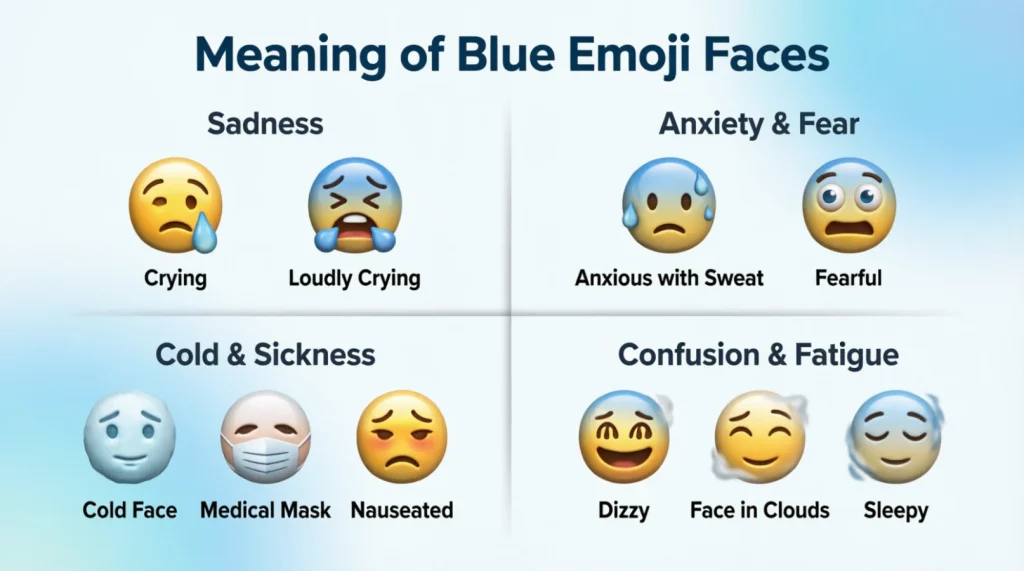
Blue emoji faces are commonly connected with feelings such as being cold, sad, nervous, tired, disappointed, or emotionally overwhelmed. Their meaning can change depending on the words surrounding them and the relationship between the people chatting.
The 🥶 face is especially useful for literal coldness, but it can also exaggerate an uncomfortable situation. 😢 and 😭 are strongly associated with sadness, while 😰 can make a message feel nervous or worried. Softer faces such as 😔 and 😞 can communicate disappointment or a low mood without sounding dramatic.
| Emoji | Core meaning | Misread as | Best used when |
| 🥶 | Feeling extremely cold | Shock or fear | Talking about freezing weather |
| 😢 | Quiet sadness | Mild disappointment | Sharing a genuinely sad feeling |
| 😭 | Strong sadness | Over-the-top humor | Dramatic or emotional reactions |
| 😥 | Sadness with relief | Worry | Difficult situations that ended better |
| 😰 | Anxiety or nervousness | Sweating from heat | Stressful or uncertain moments |
| 😨 | Fear or alarm | General surprise | Reacting to something frightening |
| 😓 | Stress or exhaustion | Simple tiredness | Work, pressure, or difficult days |
| 😪 | Sleepiness or fatigue | Sadness | Late-night or exhausted moments |
| 😔 | Pensive sadness | Anger or boredom | Quiet disappointment |
| 😞 | Disappointment | General sadness | When something did not go as hoped |
🥶 Cold Face
Meaning: Feeling freezing cold, chilled, or extremely uncomfortable.
Example 1: It is freezing outside
Example 2: This room is so cold
😢 Crying Face
Meaning: A gentle expression of sadness, hurt, or emotional disappointment.
Example 1: I really miss you
Example 2: That ending made me sad
😭 Loudly Crying Face
Meaning: A strong emotional reaction that can express sadness or dramatic humor.
Example 1: I cannot believe it happened
Example 2: That was so emotional
😥 Sad but Relieved Face
Meaning: An emotional reaction combining sadness, worry, and a sense of relief.
Example 1: I was so worried about you
Example 2: Everything is finally okay
😰 Anxious Face with Sweat
Meaning: Nervousness, anxiety, pressure, or discomfort in a tense moment.
Example 1: I hope everything goes well
Example 2: That was way too close
😨 Fearful Face
Meaning: Fear, alarm, or an uneasy reaction to something unexpected.
Example 1: What was that sound
Example 2: I did not expect this
😓 Downcast Face with Sweat
Meaning: Stress, pressure, embarrassment, or feeling worn out.
Example 1: Today was exhausting
Example 2: I have so much work
😪 Sleepy Face
Meaning: Tiredness, drowsiness, or wanting to go to sleep.
Example 1: I need some sleep
Example 2: I can barely stay awake
😔 Pensive Face
Meaning: A quiet, thoughtful, disappointed, or emotionally low mood.
Example 1: I wish you were here
Example 2: Things feel different today
😞 Disappointed Face
Meaning: Disappointment, discouragement, or feeling let down.
Example 1: That did not go as planned
Example 2: I really hoped for better news
How to use blue emoji faces the right way
On WhatsApp, blue emoji faces work naturally in personal conversations because they can add emotion without requiring a long explanation. A short message such as “I miss you 😢” can feel warmer and more expressive than plain text.
On Instagram, these expressions can support captions, comments, stories, and relatable posts. Instagram emojis often work best when they match the visual mood rather than being added randomly.
TikTok uses emojis heavily for humor, reactions, exaggeration, and irony. A sad-looking face can sometimes be paired with a funny sentence to create a deliberately dramatic effect.
Dos: Match the face to the situation, use combinations sparingly, and consider your relationship with the person.
Don’ts: Do not overload one sentence, use a serious-looking face in an insensitive context, or assume every face has exactly the same meaning for everyone.
Best blue emoji faces combos copy & paste
Romantic
- 😔💙 Missing someone you love
- 😢💙 Sharing a tender emotional moment
- 😭💙 Dramatically expressing deep affection
- 😪💙 Sending a sleepy goodnight message
Cute
- 😥😢 A soft emotional reaction
- 😪🥶 Feeling sleepy and chilly
- 😔😪 A quiet, tired mood
- 🥶😢 Playfully complaining about the cold
Flirty
- 😔😰 Acting shy or nervous in a chat
- 😰😢 Pretending to be worried while teasing someone
- 😪😔 Sending a soft late-night reaction
Missing someone
- 😢😔 Saying you miss someone quietly
- 😭💙 Showing stronger emotional longing
- 😥😔 Expressing a gentle feeling of missing them
Good night
- 😪💙 A sweet sleepy sign-off
- 😔😪 Saying goodnight when you feel sentimental
Trending blue emoji faces in 2026
In 2026, emotional reaction faces continue to fit naturally into short-form conversations, especially where users want to communicate a mood quickly. 🥶 works well for exaggerated cold-weather reactions, while 😭 frequently appears in humorous or dramatic responses.
Younger users and content creators often combine familiar emotional faces with short text, captions, and reaction-based posts. Their appeal comes from being easy to understand while still leaving room for humor, exaggeration, or personal interpretation.
| Emoji | Why trending | Who uses it | Platform |
| 🥶 | Strong visual reaction to cold or discomfort | Casual texters and creators | TikTok, Instagram |
| 😭 | Dramatic and humorous emotional reactions | Younger users and creators | TikTok, Instagram |
| 😰 | Useful for nervous or tense reactions | Chat users and commenters | WhatsApp, TikTok |
| 😔 | Fits reflective and emotional captions | Casual users and creators | Instagram, WhatsApp |
As digital conversations evolve, emoji use generally continues to blend literal emotions with humor, exaggeration, context, and personal style.
FAQs:
1. What is the most popular blue emoji face?
🥶 is one of the clearest blue-associated face emojis because its appearance and expression strongly suggest coldness. Other emotional faces can also create a “blue mood” depending on context.
2. What does 😢 mean from a girl or boy?
😢 generally communicates sadness or emotional hurt regardless of gender. The surrounding message and relationship usually provide more context than the sender’s gender.
3. Why do emojis look different on iPhone vs Android?
Emoji designs are created by different platforms and font systems, so facial details, colors, shapes, and expressions can vary. The underlying emoji character remains the same.
4. Are blue emoji faces used differently in other countries?
Yes, context can influence emoji interpretation across cultures and online communities. However, common emotional expressions are often understandable even when users speak different languages.
Conclusion
Blue emoji faces make everyday digital conversations more expressive by adding mood and personality to short messages.
Choose one that fits your situation and let the surrounding words provide the context.
If you’re chatting privately or posting publicly, a well-matched expression can make your message feel more natural and relatable.